< Poetry < Interesting Articles < Inspiring Stories < Stories from Reverts | Prayer Timetables > What is Islam > Salat > Ramadan > Hajj >  Qur'an >

Thursday, 23 October 2008

Warning over Hajj pilgrimage rip-offs

Warning over Hajj pilgrimage rip-offs

Taken from The Observer, UK, Sunday August 31 2008

The government has warned British Muslims embarking on the Hajj pilgrimage to Mecca in Saudi Arabia this year to be on their guard against scams and rip-offs. Up to 50,000 Britons make the pilgrimage each year, but ministers have become concerned with the growing problem of unscrupulous travel agents cashing in on religious devotion.
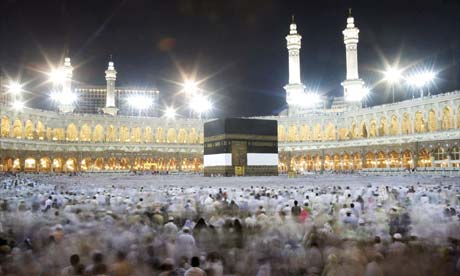


Hotel and flight deals can cost more than £3,000, and every year hundreds fall victim to a variety of scams: paying for a five-star hotel near the Masjid al-Haram (the mosque that is a focal point of the event), but getting a tiny room far from the centre of Mecca; visas and flight tickets not arriving; and in extreme cases agents disappearing with their money.

Consumer affairs minister Gareth Thomas convened a conference of travel agents, community groups and consumer organisations last month, and told them that the government aimed to 'help pilgrims avoid booking with rogue travel agents, and to get redress when they fall foul of those who break the law'.

The Department for Business, Enterprise and Regulatory Reform is planning a poster campaign in community centres and mosques aimed at improving awareness of consumer rights, and stressing the need to check that a tour operator to December's Hajj holds an Air Travel Organiser's Licence (Atol), that any company booked with is a member of a trade organisation such as Abta and to keep all documents such as contracts and invoices in case of later problems.

One of the groups that flagged up the problem, the Association of British Hujjaj, welcomed the move, saying the 'vast majority' of Hajj travel operators were one-man operations and 'simply opportunists who are looking for monetary gain by taking advantage of the vulnerable'. Last year, it handed a petition signed by 5,000 Hajj travellers to the government.

Dr Nadim Nayyar, from Liversedge in West Yorkshire, booked last year through a Luton-based firm, Go4 Hajj. His party of nine paid for a luxury package costing £32,000. Just 48 hours before they were due to depart, Nayyar discovered their Saudi Arabian visas had not been obtained by the company. 'Our Hajj was over. I felt totally devastated,' he said.

'The pre-Hajj seminar, where we were supposed to meet other travellers, kept on getting delayed. Then we found that our flights had been altered from scheduled to chartered, changing in Bahrain. Then we found out they couldn't get the five-star hotels they had promised, and we were being downgraded.'

After learning that their trip was cancelled, Nayyar and 60 other pilgrims who had been let down were told the firm had no assets left to refund them, although he eventually recovered his money through Go4 Hajj's Atol cover.

'This is not just a package holiday, but an obligatory religious visit, so people tend to be far too trusting,' said Nayyar. 'I think that's where we fell down.'

Wednesday, 22 October 2008

Makkah’s Zamzam Mafia Is Active Once Again

Makkah’s Zamzam Mafia Is Active Once Again
Taken from Arab News, 24 September 2007
By Badea Abu Al-Naja


Citizens and visitors in Makkah this year hoped for a hassle-free filling system at the Zamzam refill station near Kuday roundabout. However, they have been shocked to find a gang of overstayers monopolizing the water distribution.


A gang of overstayers are monopolizing the Zamzam distribution. (AN photo by Badea Abu Al-Naja)

The Zamzam mafia sells holy water, which is available free of charge, at SR16 per gallon. Arab News toured the area to see the illegal activities of the Zamzam mafia — mainly illegal Africans and South Asian nationals, especially Burmese.

The Zamzam mafia is effectively managing a monopoly of Zamzam taps and prevents pilgrims and visitors from filling their cans with water. If any of the gang members manning the taps leaves, then another member of the gang takes his place.

One wonders why there are no policemen at the location to stamp out this problem. People are unable to obtain even a drop of water unless they pay the gang members small fees. The mafia also physically pushes people away and is known to beat people who “invade their turf.”

The absence of police or officials at the location offers the overstayers a perfect opportunity to make a fast buck. Arab News also discovered that some overstayers and foreign residents adulterate Zamzam water with ordinary water and sell it to pilgrims as pure Zamzam. The absence of authority has allowed the Zamzam station to become dirty with spilt water everywhere — something that poses a serious health hazard.

Arab News also learned that the various gangs that make up the Zamzam mafia fix prices and have an agreement not to step into each other’s turf. They also buy hundreds of empty cans to sell to pilgrims.

I approached one of the members — a Burmese man, and told him that I wanted to fill 500 Zamzam cans. “Do you have the empty cans? If you want, you can buy them from me at the rate of SR10 per can, which I’ll fill for you for SR8 per gallon,” he said. I haggled with him for a reduced rate but he refused saying that his price was final. I went to another man and he offered to fill it for SR7 per can. If one person could fill an average of 500 gallons per day at the price of SR8 per gallon, then they would make around SR4,000 a day.

Ali Hassan, a Saudi citizen, feels frustrated by the Zamzam mafia. “Last year the place was divided into two sections. One section was for individuals and the other section was for mosques and charity organizations,” he said.

“The refilling process at the place was controlled by a private company. Each individual had the right to fill five gallons at one time. We used to pay SR1 per gallon. Now the whole place is under the total control of these unscrupulous overstayers,” he said.

Majed Samir, a Saudi citizen, arrived at the place in the afternoon to fill two gallons of Zamzam water. He said that he tried to fill it himself but was not allowed by the Zamzam mafia. In the end he had no choice but to pay them SR16 per gallon.

“I agreed to pay under the condition that they would carry them to my car and they agreed.

Shortly after that, the Passport Department raided the place and the mafia members ran away.

After the Passport Department left, another foreigner came to me and told me that the man who offered to fill the cans for me was arrested,” he said.

“This second man offered to fill my cans if I paid him SR7 per can. While he was filling my gallons I saw the first man walk in. I realized then that these people even con each other. I decided to leave and not to create a big scene because it wasn’t any use in the absence of the police,” he added.

Nizar Suwaileh said that what was happening inside the Zamzam station was a joke. He wondered how foreigners had managed to take control and why the police were not addressing the issue. “The government built this place to help people get Zamzam water without any hassle.
Instead we’re insulted and pushed around by these people,” he added.

Ayed Al-Luqmani, head of the Passport Department in Makkah, said that the department is conducting daily raids to arrest overstayers and has managed to arrest several violators.

Saturday, 11 October 2008

Dial M for Mufti and you can quiz the world's first Islamic helpline

Taken from The Times, UK, October 10, 2008
By Sonia Verma

One of
the most distinguished muftis in the Gulf switches on his computer, dons a headset and prepares to issue yet another fatwa.


Abdulrahman Ammoura, 48, usually dispenses his religious advice to the faithful at a nearby mosque but today he is in a cramped cubicle in Abu Dhabi, answering the telephone at the world's first call centre for people seeking a fatwa, or religious edict. The popularity of the service easily eclipses attendance at his Friday prayers; it is used by Muslims all over the world, and its organisers say it now takes about 3,700 calls a day, including queries from Britain.

“I am tired, so tired,” the mufti says, midway through a six-hour shift. “I hear ringing in my ears.” He is distressed by his most recent caller, a married woman whose alcoholic husband had turned violent, hitting her and forcing her to have sex. Should she seek a divorce, the woman asked. “I said, ‘No - it is better for him to find help'. A woman living alone with children could face too many problems.”

His advice now counts as an official fatwa in the United Arab Emirates, under new rules issued by the General Authority for Islamic Affairs and Endowments. The UAE Government established the call centre three months ago in an attempt to root out extreme interpretations of Islam issued by unqualified scholars. All fatwas issued through the call centre comply with the Government's moderate religious stance. Any others are considered invalid instructions.

The 48 muftis who staff the phones - there is also a handful of female scholars - are screened by the authority and must show impeccable credentials in Islamic law. They work in teams, with six men and two women on six-hour shifts, between 8am and 8pm on working days.

A skeleton staff takes calls for “religious emergencies” during the night.

The UAE follows the Maliki school of Sunni Islam, which the Government considers a “moderate, middle way” of the religion.

Callers can select the service in Arabic, Urdu or English. Each workstation is equipped with religious reference texts and the internet so that the muftis can consult a variety of sources before issuing their rulings.

Most callers have questions concerning the rules of worship, relationships and business. All the muftis interviewed said that, so far, none of their callers had questions relating to any kind of extremism or violence. “The hardest questions I am asked involve sex,” said Mufti Ammoura, who began his career as an imam in the UAE Air Force 25 years ago. “I feel shame, but I have to answer the questions because it is my duty.”

Apart from the freephone line (800 2244 within the UAE, for which the international prefix is +971) the muftis get thousands of questions via their website, awqaf.ae - although the site is Arabic only - and by SMS, with a maximum 270-character response.

Each call is limited to three minutes, but the muftis complain that some callers break the rules, refusing to hang up or calling again and again with the same question. “One caller opened his heart to me for more than an hour. What can I do?” one said.

Officials will not disclose the cost of the call centre. Depending on his qualifications, a mufti can earn between £1,250 and £2,300 a month, not including overtime.

There are also plans for expansion, hiring 50 more muftis and opening satellite centres elsewhere in the Muslim world. “We were not prepared for the popularity,” one official said. “Already, we get more calls than Emirates Airlines.”

Further Reading:
Give us a Mufti, say UK Muslims - Times, June 10, 2007

Wednesday, 1 October 2008

Pic: Day of Eid-ul-Fitr in Makkah 2008

Pictures taken from Daily Mail, 30th September 2008

It's one of the most awe-inspiring sights in religion.

Hundreds of thousands of Muslims circled the Kaaba inside and outside the Grand Mosque in the Saudi Arabian city of Makkah this morning.


Tuesday, 16 September 2008

Common Errors in Prayer that must be avoided

Thanks to Nazrul Islam for forwarding this...

Forward it to many Muslims, so that they can learn and correct their mistakes with the help of Allah

Common Errors in Prayer That MUST Be Avoided:-

1. Reciting Surat al-Fatiha fast without pausing after each verse.
The Prophet (SAW) used to pause after each verse of this surah. (Abu Dawood)

2. Sticking the arms to the sides of the body, in rukoo' or sujood, and sticking the belly to the thighs in sujood.
The Messenger of Allah (SAW) said: "Let not one of you support himself on his forearms (in sujood ) like the dog.

Let him rest on his palms and keep his elbows away from his body." ( Sahih Muslim)

The Messenger of Allah (SAW) used to keep his arms away from his body during rukoo' and sujood that the whiteness of his armpits could be seen ( Sahih Muslim).

3. Gazing upward during prayer. This may cause loss of concentration. We are commanded to lower our gaze, and look at the point at which the head rests during sujood.
The Prophet (SAW) warned: "Let those who raise their gaze up during prayer stop doing so, or else their sights would not return to them. [ i.e. Lose their eyesight]. " ( Muslim)

4. Resting only the tip of the head on the floor during sujood.
The Prophet (SAW) said: "I am commanded to prostrate on seven bones the forehead and the nose, the two hands [palms],the two knees, and the two feet." ( Sahih Muslim)

Applying the above command necessitates resting the forehead and the nose on the ground during sujood.

5. Hasty performance of prayer which does not allow repose and calmness in rukoo' or sujood.
The Messenger of Allah (SAW) saw a man who did not complete his rukoo' [bowing], and made a very short sujood [prostration]; he(SAW) said: "If this man dies while praying in this manner, he would die upholding a religion other than the religion of Muhammad."

Abu Hurairah (RA) said:"My beloved friend, Muhammad (SAW) forbade me to perform postures of prayer copying the picking of a rooster; (signifying fast performance of prayer), moving eyes around like a fox and the sitting like monkeys ( i.e. to sit on thighs)." (Imam Ahmad & at-Tayalisi)

The Messenger of Allah (SAW) said: "The worst thief is the one who steals from his own prayer." People asked, 'Messenger of Allah! How could one steal from his own prayer?' He(SAW) said: "By not completing its rukoo' and sujood."(At-Tabarani & al-Hakim).

To complete rukoo' is to stay in that posture long enough to recite 'subhana rabbiyal Adtheem' three times, SLOWLY,and'subhana rabbiyal-a'ala' three times, SLOWLY, in sujood.

He (SAW) also announced:"He who does not complete his rukoo' and sujood, his prayer is void." (Abu Dawood & others)

6. Counting tasbeeh with the left hand
The Prophet (SAW) used to count tasbeeh on the fingers of his right hand after salah.

lbn Qudamah (RA) said:?"The Messenger of Allah (SAW) used his right hand for tasbeeh." ( Abu Dawud)

The above hadeeth indicates clearly that the Prophet (SAW) used only one hand for counting tasbeeh. No Muslim with sound mind would imagine that the Prophet (SAW) used his left hand for counting tasbeeh. Aa'ishah (RA) said that the Prophet (SAW) used his left hand only for Istinjaa', or cleaning himself after responding to the call of nature.?He never used it for tasbeeh.

Yasirah (RA) reported:?The Prophet(SAW) commanded women to count tasbeeh on their fingers.

The Messenger of Allah (SAW) said: "They (the fingers) will be made to speak, and will be questioned (on the Day of Resurrection.)" (At-Tirmithi)

The above hadeeth indicates that it is preferable to count tasbeeh on the fingers of the right hand than to do so on masbahah(rosary).

7. Crossing in front of a praying person.
The Messenger of Allah (SAW) warned: "Were the one who crosses in front of a praying person to know the consequences of doing so, he would have waited for *forty better than to cross in front of him." (Sahih Bukhari and Muslim).

*The forty in the tradition may be days months or even years.
Allah knows best.


Further Reading:

For more advice on avoiding mistakes during Salaat please read the following document:

40 Commmon Mistakes in Salaat - Saalih Ibn Abdul-Azeez Ibn Muhammad Aalish-Shaykh (hafithahullah) (PDF)

Friday, 12 September 2008

Boycott fake Zam Zam water

A couple of years ago during Ramadan, I purchased a few bottles of Zam Zam water from my local mosque. Little did I know that the Holy water of Zam Zam is prohibited by the Saudi government to be sold within the Saudi Kingdom or to be exported outside it for commercial purpose.

Zamzam is the name of a famous well in al-Masjid al-Haraam [the Sacred Mosque in Makkah], which is thirty-eight cubits away from the Holy Ka’bah.

The miracle of how it came to being in the middle of a desert, its consistency throughout 1000s of years, the beneficial qualities it has, and the fact that it never dries up makes this water is special.

Muslims refer to the water of ZamZam as something revered and unique. They crave this mysterious liquid and love to drink it whenever they can. And for those who managed to go to the Hajj, they return home carrying it for thousands of miles as a prized possession and to give as special gift to their friends and families.

It is noted that what is called "Zam Zam water" is sold all over the country in different packages and bottles for the Muslim community.


In most cases the water is just ordinary imported contaminated water with salt added to it.

But in some cases - the imported water has almost three times as much nitrate and twice as much arsenic as the World Health Organisation believes is safe.

Studies show children under six months and elderly people are particularly vulnerable to excessive nitrate while regular consumption of arsenic in water is responsible for hundreds of thousands of deaths a year in south east Asia. Diluted arsenic has been associated with disorders of the nervous system, loss of sensation in the limbs and hearing impairment.

Criminal gangs operate multi-million pound illegal racket selling these fake holy water. The black market trade in fake 'Zam Zam' water - is becoming a serious concern for health officials.

Real Zam Zam water was tested in 1971 and found to be fit for drinking. Tests showed it had a greater quantity of calcium and magnesium salts than normal water, which may explain why it can help refresh pilgrims. It also contains fluorides that can help combat germs.

The UK Food Standards Agency has warned Muslims not to buy the water. A number of London councils, have seized fake bottles. LAst year trading standards officers seized bottles from a shop in Notting Hill, west London, and similar seizures have been carried out in Gloucester, Barnsley and Leicester.

My advice to anyone is boycott these shops that sell Zam Zam water. If you want to taste Zam Zam water simply ask someone who has done Hajj recently - they will happily share some water with you insha-Allah.

Further reading:


(1) UK Muslims warned: don't drink poisonous 'holy' water - The Observer, October 7 2007

(2) Batch of fake holy water seized - BBC News, 13 September 2007

(3) Letter from Saudi Embassy to UK Food Standards Agency - Central London Mosque, 22 August 2005

Thursday, 11 September 2008

Pictures: Makkah redevelopment project

Following on from the article
Islam's holiest city set for 130-skyscraper redevelopment

Here are some pictures of the redevelopment that is currently taking place in Makkah. The pictures are in no particular order and has been taken from forum on skyscrapercity.com. Do visit the site for up-to-date pictures. Thanks to Fahd Masood for the idea of a pictorial update of Makkah redevelopment.

Pictures before redevelopment
(click on the pictures to make them bigger)


Different Proposals
(I am not sure which one has been selected)


Pictures of the redevelopment taking place